
The Spix’s Macaw, a radiant parrot cloaked in shimmering cobalt-blue feathers, once danced through Brazil’s Caatinga woodlands, its vibrant presence a testament to nature’s artistry. Presumed extinct in the wild by 2000, this exquisite bird, known for its intelligence and striking beauty, now lingers only in captivity, a poignant symbol of loss and hope. Native to northeastern Brazil, the Spix’s Macaw captivated early explorers and Indigenous communities alike, yet fell victim to human greed and environmental neglect. This article delves into the Spix’s Macaw’s life, its cultural resonance, the causes of its disappearance, and the inspiring efforts to bring it back, honoring its legacy as Brazil’s blue-winged marvel.
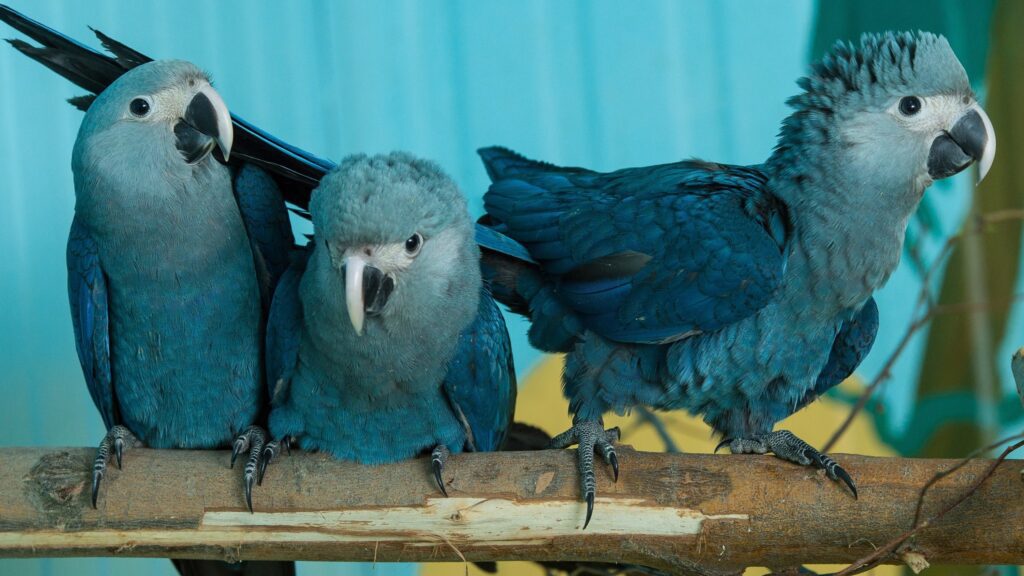
The Dazzling Splendor of the Cobalt Spix’s Macaw
A Shimmering Blue Spectacle
The Spix’s Macaw was a breathtaking sight, its feathers a vivid, electric blue that sparkled in Brazil’s sunlight. With a pale gray head, vivid green wing accents, and piercing yellow eyes, it stood out even among other macaws. For example, its sleek, slender form and long tail made it an agile flier, darting through thorny Caatinga trees. This vibrant plumage not only dazzled observers but also signaled health during social interactions, cementing the cobalt macaw’s status as a natural masterpiece.
Habitat in Brazil’s Caatinga
The Spix’s Macaw inhabited the arid Caatinga, a distinctive Brazilian landscape of dry shrublands and riverine woodlands along the São Francisco River. It depended on caraiba trees for nesting and feeding, blending into the sparse canopy. However, deforestation for farming and ranching devastated these habitats, leaving the vanished parrot without refuge. Its ecological niche, as explored in our Birds by Region category, underscores the fragility of Brazil’s lesser-known biomes.
Behavior and Ecology of the Vanished Spix’s Macaw
Social Bonds and Vocal Charm
The Spix’s Macaw was a sociable creature, forming close-knit pairs or small flocks that filled the Caatinga with sharp, raspy calls. These vocalizations, used for communication and territory defense, echoed through the dry forests, a sound now lost to the wild. For instance, their intelligence shone in playful interactions, like tossing seeds or mimicking sounds. Learn more about parrot vocalizations in our Bird Songs and Calls category, where the Spix’s Macaw’s cries are a haunting memory.
Nut-Cracking Diet
As seed-eaters, Spix’s Macaws used their powerful beaks to crack tough nuts and seeds from caraiba and faveleira trees, supplementing with fruits and berries. Their foraging helped disperse seeds, supporting Caatinga biodiversity. As a result, their ecological role was vital, yet habitat loss disrupted their food sources. The blue-winged marvel’s diet reflects its deep connection to a now-dwindling landscape, making its absence a blow to Brazil’s ecosystems.
The Heartbreaking Fall of the Blue-Winged Spix’s Macaw
Human-Driven Extinction
The Spix’s Macaw’s extinction in the wild was a calamity driven by human actions. By the late 20th century, relentless deforestation erased its Caatinga habitat, while illegal trapping for the pet trade ravaged populations. For example, its stunning feathers and rarity made it a prized cage bird, fetching high prices globally. By 2000, the last known wild Spix’s Macaw, a lone male, vanished, marking the species’ extinction in nature.
Overlooked Calls for Salvation
Initial alerts from ornithologists were ignored, as Brazil lacked effective conservation measures during the Spix’s Macaw’s critical years. Unlike today’s initiatives, no protected areas existed to shield the cobalt macaw from poachers or habitat destruction. Moreover, its dwindling numbers led to inbreeding in captivity, hindering recovery. The Spix’s Macaw’s plight emphasizes the need for timely conservation, a principle now guiding efforts for other macaws.
Cultural Legacy of the Vibrant Spix’s Macaw
Indigenous and Artistic Reverence
The Spix’s Macaw was deeply woven into Brazil’s cultural fabric, with Indigenous groups like the Pankararé embedding its azure hues in myths as emblems of sky and freedom. Its beauty inspired artists, from early colonial drawings to modern films like Rio, which introduced the vanished parrot to global audiences.
A Symbol of Conservation Hope
The Spix’s Macaw’s story transcends loss, sparking global fascination with its plight. Its image adorns conservation campaigns, rallying support for Brazil’s wildlife. Furthermore, its role in ecotourism, even as a captive bird, draws attention to the Caatinga’s plight. Organizations like WWF Brazil champion its revival, using the blue-winged marvel as a flagship for habitat restoration, inspiring hope for other endangered species.
Revival Efforts for the Cobalt Spix’s Macaw
Captive Breeding and Reintroduction
Hope for the Spix’s Macaw persists through captive breeding programs in Brazil, Germany, and Qatar, where fewer than 200 birds survive. Since 2020, reintroduction efforts have released small groups into protected Caatinga reserves, with early successes reported. For example, GPS-tracked macaws are adapting to the wild, a milestone in conservation.
Challenges and Future Prospects
Reintroducing the Spix’s Macaw faces hurdles, including habitat restoration and protecting released birds from poaching. Climate change further threatens the Caatinga’s fragile ecosystem, complicating recovery. Nevertheless, community involvement, such as local monitoring programs, bolsters these efforts. The cobalt macaw’s revival symbolizes a broader commitment to reversing extinction, offering a blueprint for other lost species.
Why the Spix’s Macaw Still Captivates Us
The Spix’s Macaw, with its radiant blue wings and indomitable spirit, remains a beacon of Brazil’s natural heritage, even in its absence from the wild. Its story of beauty, loss, and revival stirs emotions, urging us to protect our planet’s treasures. From Indigenous tales to modern conservation triumphs, this parrot bridges past and future. In conclusion, the Spix’s Macaw inspires us to restore ecosystems and cherish biodiversity before more marvels vanish. Have you been moved by the Spix’s Macaw’s story or another extinct bird? Share your thoughts in the comments and join our community of nature lovers!